

 上傳3D模型
 上傳SU模型
 合成全景
合成全景韋來攝影藝術(shù)空間 | 余留地
位于北京東郊的朗園Station是正在蓬勃興起的商業(yè)街區(qū),其前身是廢棄的紡織品倉儲(chǔ)基地。始于50年代,大多數(shù)建筑都已經(jīng)超齡服役。由于初建時(shí)期抗震標(biāo)準(zhǔn)不高,磚墻多處已經(jīng)開裂,構(gòu)造柱也不完整交圈。可以劃作危房的現(xiàn)狀條件,對于任何當(dāng)代功能的植入都是挑戰(zhàn)。余留地團(tuán)隊(duì)將其中一棟長42米,寬30米,高8.5米的磚混結(jié)構(gòu)庫房進(jìn)行了徹底的翻新,為攝影師業(yè)主提供了如藝術(shù)博物館般的工作環(huán)境。
The project’s location, Langyuan Station, is a revitalized commercial district historically used as textile factory in Beijing’s eastern suburb. Built in the 1950s, most facilities in the premise have been obsolete due to unsound structural issues. Structural cracks along brick walls and broken concrete reinforcements make the conditions challenging for any adaptational re-use. DesignRESERVE has taken one of the main structures and transformed it into a museum like workspace for a renowned photographer.
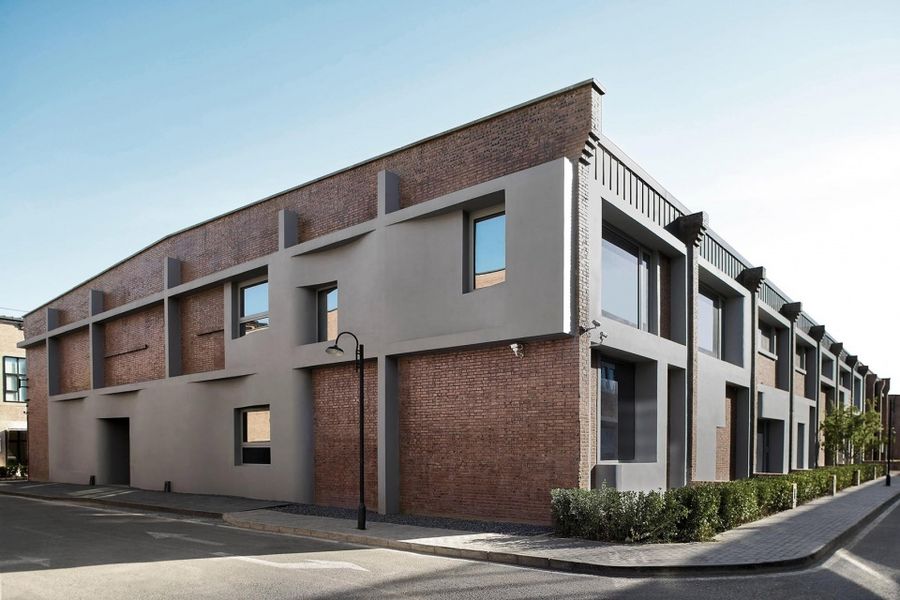
▼建筑外觀概覽,exterior view of the building ? 安利
業(yè)主的基本要求是在新體量里容納下三個(gè)攝影棚。其中包括兩個(gè)常規(guī)棚,凈高在5-8米之間,以及一個(gè)天光棚,凈高3.5米。封閉如暗盒的攝影棚是業(yè)主日常工作的區(qū)域。而各攝影棚之間則視作輔助空間,包括門廳,接待區(qū),休息室,走廊,樓梯,以及攝影師的個(gè)人空間。借鑒羅蘭×巴特在《明室》中對攝影圖像的類型闡述,余留地轉(zhuǎn)換了空間的主次關(guān)系。主要采用布景和受控光源從事影像生產(chǎn)的攝影棚內(nèi)部被視作Studium,即相對靜態(tài)的空間。而圍繞攝影棚的流通空間則可以利用自然光線實(shí)現(xiàn)Punctum,即視覺上更加悸動(dòng)的空間。
▼分析圖,analysis diagram ? 余留地
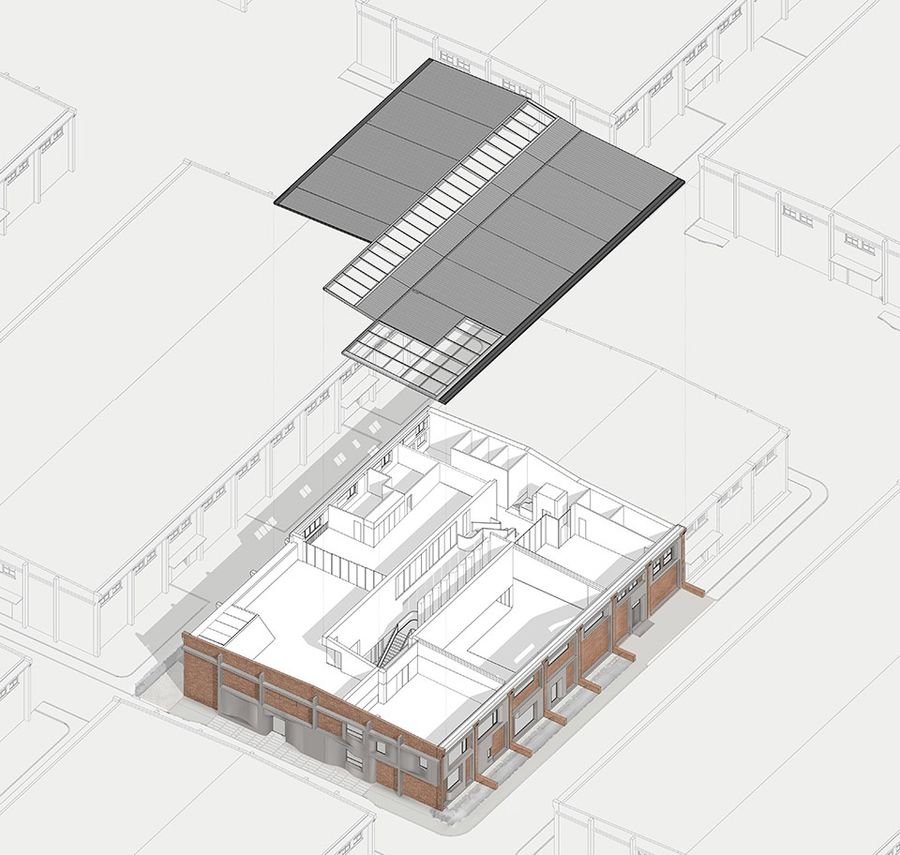
The client requests three large shooting spaces within the new volume. This includes two regular studios with head clearance of 5-8 meters, plus one sunlight studio with glass roof of 3.5-meter head clearance. The three studios are the main workspace for the photographer. The rest of the building is regarded as supportive, composed of lobby/reception, meeting areas, hallway, stairs, cafeteria and photographer’s personal lounge. The team of designReserve reconsiders the program hierarchy by reversing serving and served in spatial composition, with reference to the essay by Roland Barthes in 《Camera Lucida》. The space for producing image under artificial light is seen as “studium”, and the space of circulation is treated with natural sunlight to achieve quality of “puncdium”.
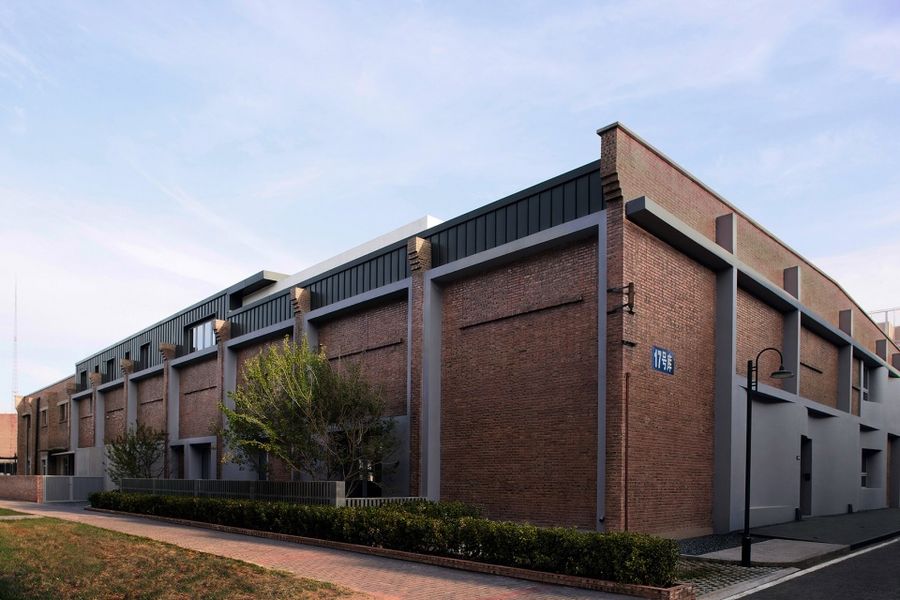
▼外墻的基本體廓被保留下來,the exterior brick wall has mostly remained ? 安利
▼混凝土框架嵌入磚墻,增強(qiáng)其結(jié)構(gòu)剛性,by inserting concrete bracings, the historic envelope is reinforced ? 安利
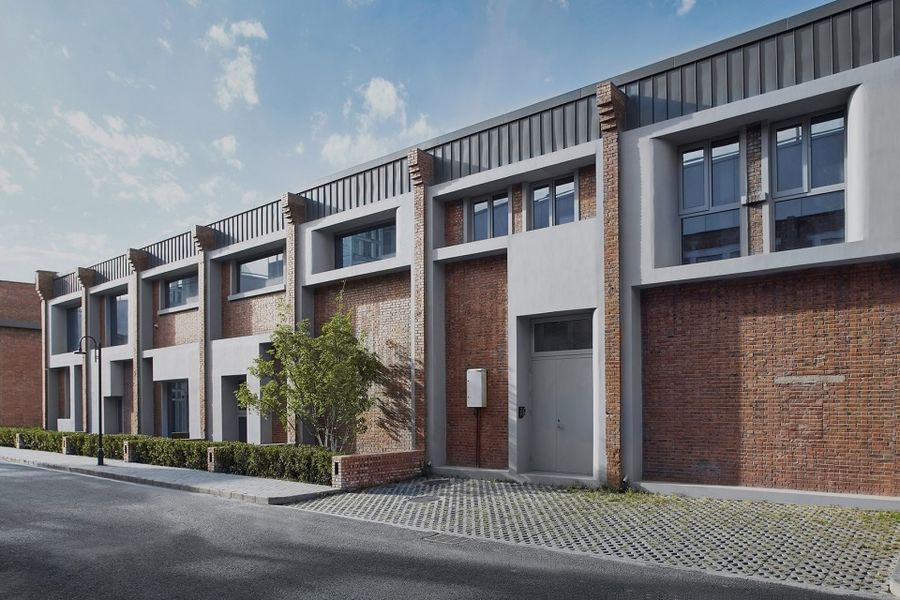
▼240厚的燒結(jié)紅磚墻體,closer view of the exterior brick wall ? 安利
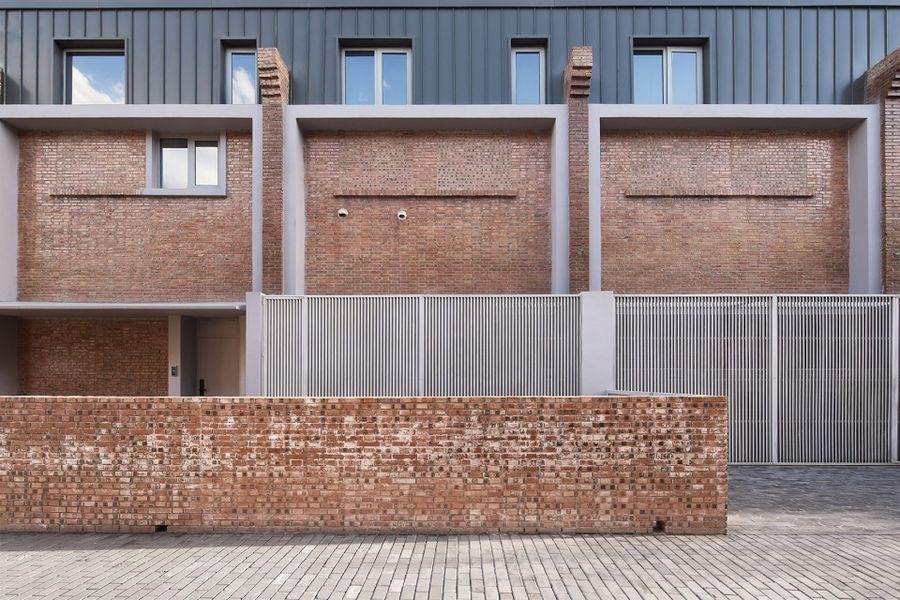
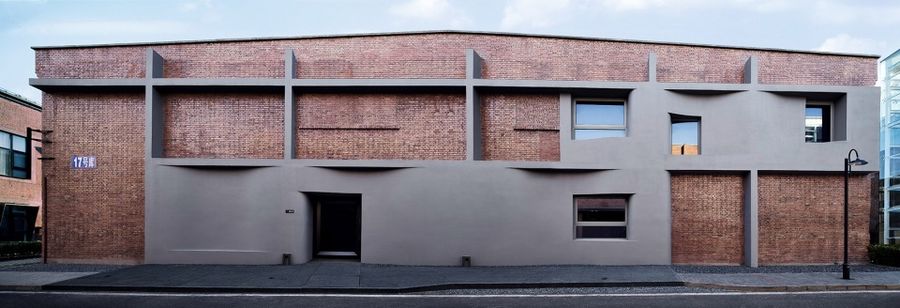
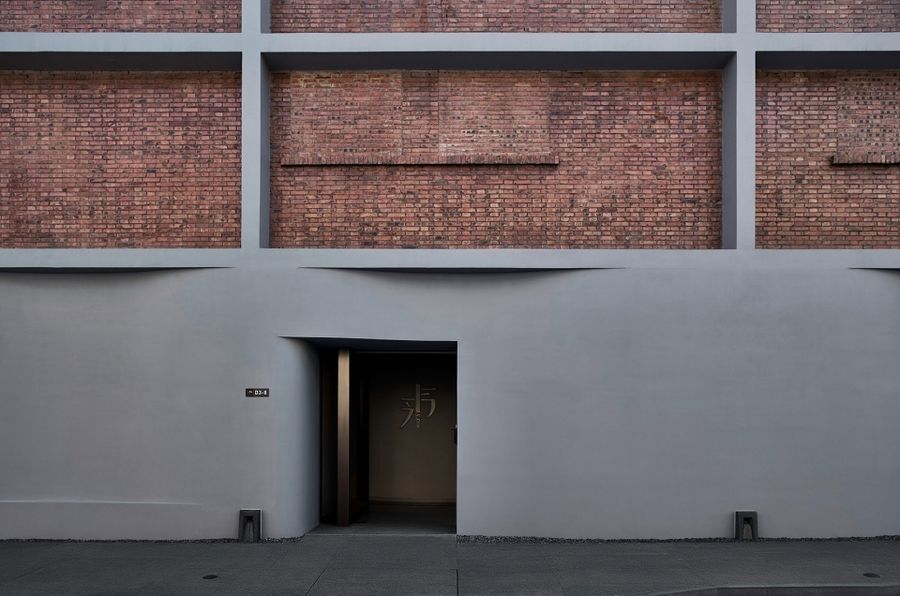
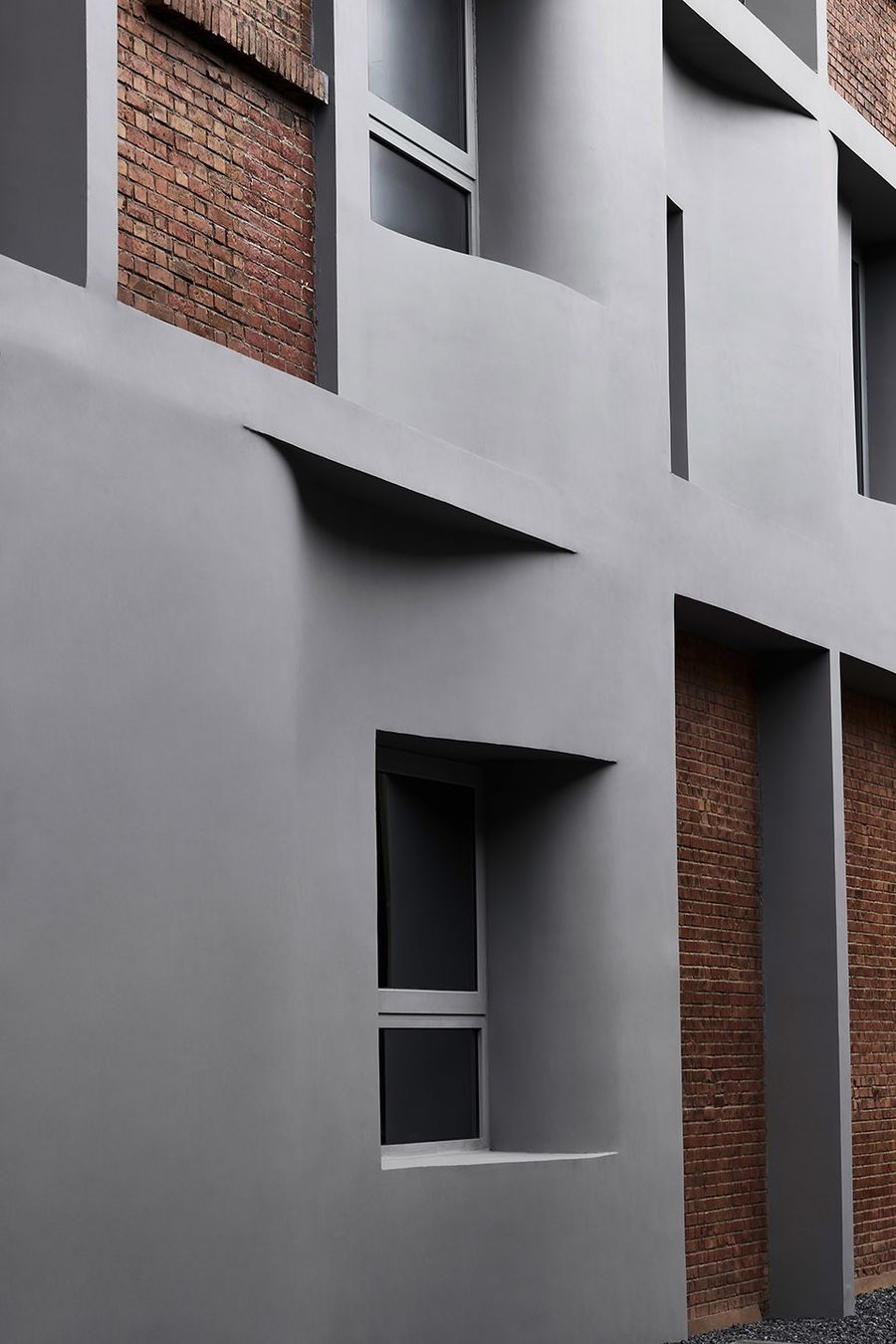
盡管原建筑內(nèi)部從地基到屋頂都被拆除重建,外墻的基本體廓被保留下來。但無論是只有240厚的燒結(jié)紅磚墻體,還是以6米為間距,帶有頂部線腳的磚壁柱,都無法支撐內(nèi)部新加建的樓層荷載。因此設(shè)計(jì)團(tuán)隊(duì)與結(jié)構(gòu)工程師密切配合,為外圍護(hù)物設(shè)計(jì)了一套新的支撐系統(tǒng)。混凝土框架嵌入磚墻,增強(qiáng)其結(jié)構(gòu)剛性,同時(shí)維持主要展開面,并使靈活調(diào)整外墻開洞成為可能。新洞口的尺寸和位置體現(xiàn)了室內(nèi)各房間對采光的需求,仿佛不同光圈的鏡頭。用于穩(wěn)定洞口的GRC外框,并不是單純的平面輪廓,而是具有流動(dòng)感的立體形態(tài),以借助陽光的照射塑造廠房的城市新面孔。
As part of the preservation effort the exterior brick wall has mostly remained, while the inside is gutted from foundation to roof to give way to a complete new structure. With the help of civil engineer, designRESERVE develops a new loadbearing system to strengthen the unstable brick wall. By inserting concrete bracings, the historic envelope is reinforced and also given flexibility for additional openings. All around the fa?ade are windows varying in size and proportion. Like changing apertures, they declare a new occupancy and the various functions behind the openings. The contrast between solid and void is further emphasized by the sculptural GRC-made window frames, which also serves as structural reinforcement.
▼主入口立面,facade of the main entrance ? 安利
▼立面細(xì)部,details of the facade ? 安利
主入口位于首層西側(cè),通過一個(gè)曲折的門斗引導(dǎo)訪客進(jìn)入大廳。大廳正對中心走廊,并連接南北兩個(gè)影棚休息室。該公共區(qū)域的表面材料由水磨石,木材,半透明玻璃和肌理漆構(gòu)成,形成非常豐富的單色調(diào)。光線從不同方向直接或間接散發(fā)進(jìn)來,交叉,反射和漸變于由若干弧形表面圍合的高敞空間。經(jīng)過仔細(xì)布置的洞口具有變化的輪廓和深度,有意拉長由光亮到昏暗的過程。這種試圖顯示照明軌跡,并創(chuàng)造多層灰色調(diào)的努力,受到安塞爾×亞當(dāng)斯(美國二十世紀(jì)著名攝影家)提出的“區(qū)域曝光法”理論啟發(fā)。
The main entrance, with big glass door resembling picture frame, is located on the west end of the building. Inside is a cavity-like threshold intended to filter glaring western exposure lights and winter’s cold blast. The reception area becomes the junction of two major photo studios and the central hallway. Covered by terrazzo, wooden panels, translucent glass and textured paint, the space presents an orchestral play of monotone shades. Natural lights come from every side, directly or indirectly, reflecting and gradating on series of curved surfaces from wall to ceiling. Carefully positioned windows and openings fluctuate in profile and depth, with the intention to extend and smooth the transition from lightness to darkness. This effort, maximizing luminance range and creating various tones of greyness, is inspired by “Zoning System” theory of Ansel Adams, one of the greatest photographers in history.
▼入口公共區(qū)域,reception area ? 安利
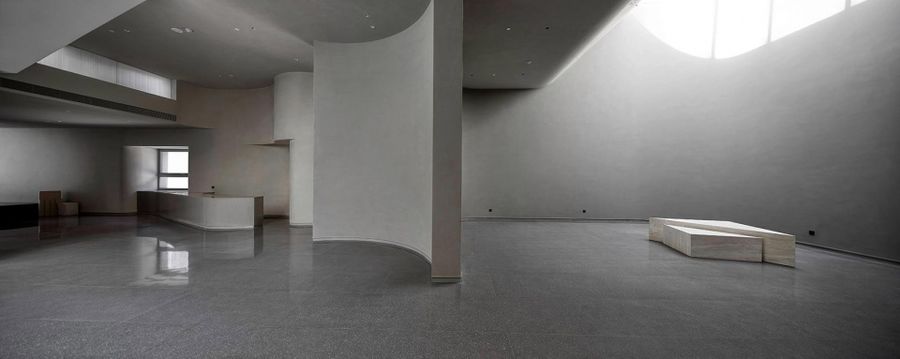
▼弧形表面圍合的高敞空間,high open space enclosed by curved surface ? 安利
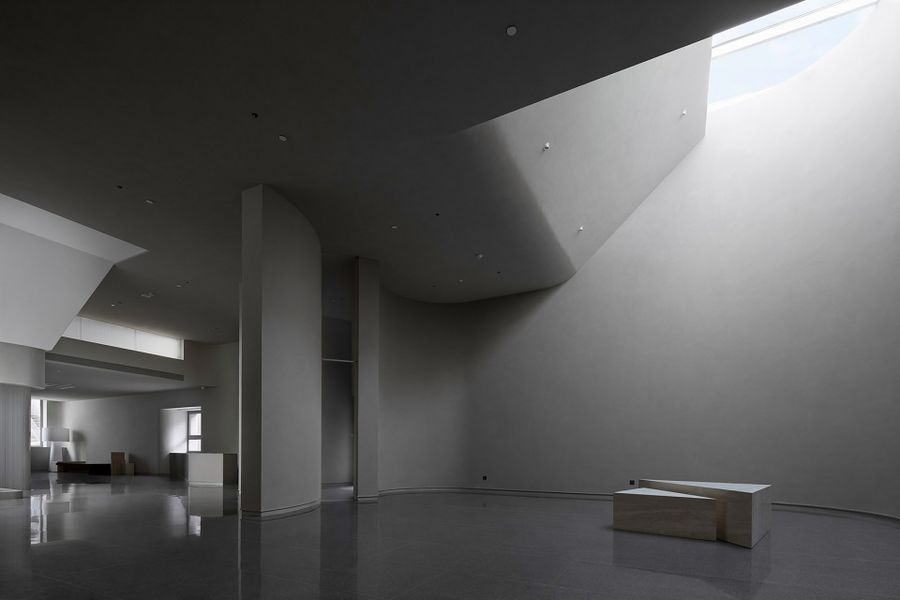
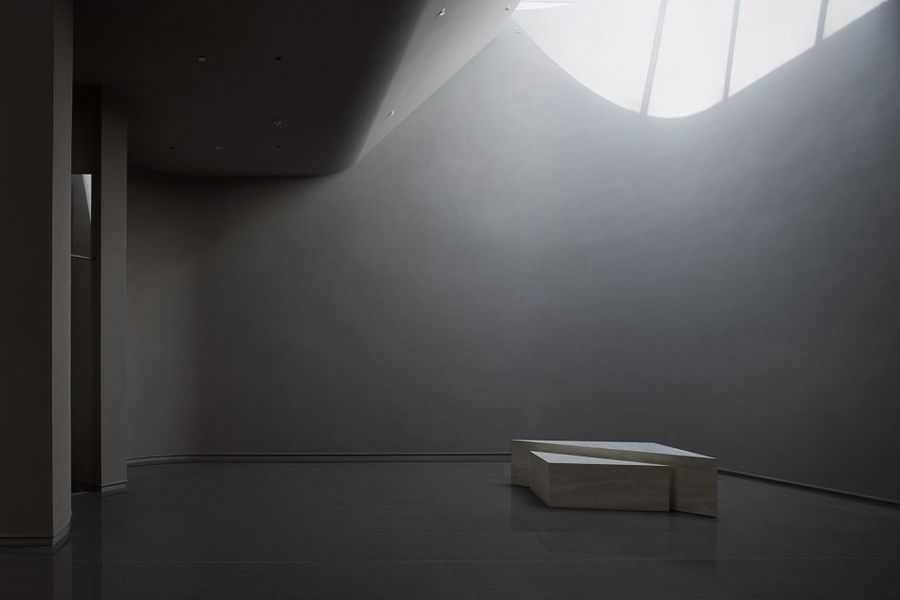
▼豐富的單色調(diào)與光線,rich monochrome space with light ? 安利
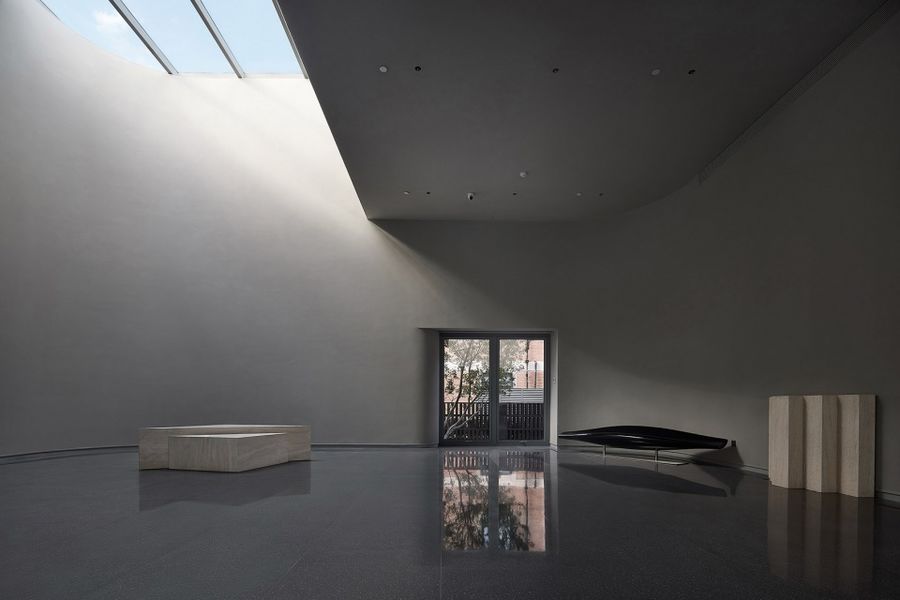
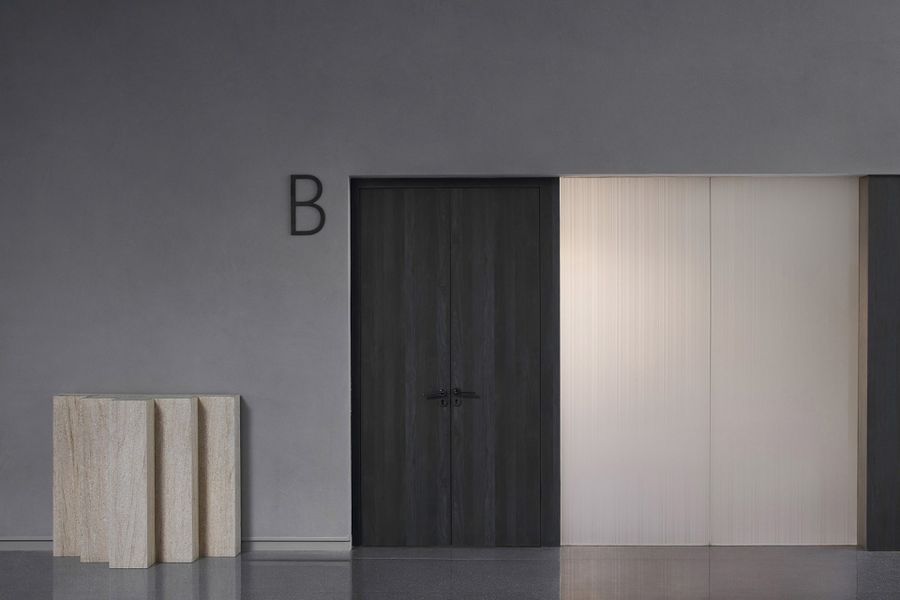
▼攝影棚B入口,entrance of the studio B ? 安利
▼攝影棚B,studio B ? 安利
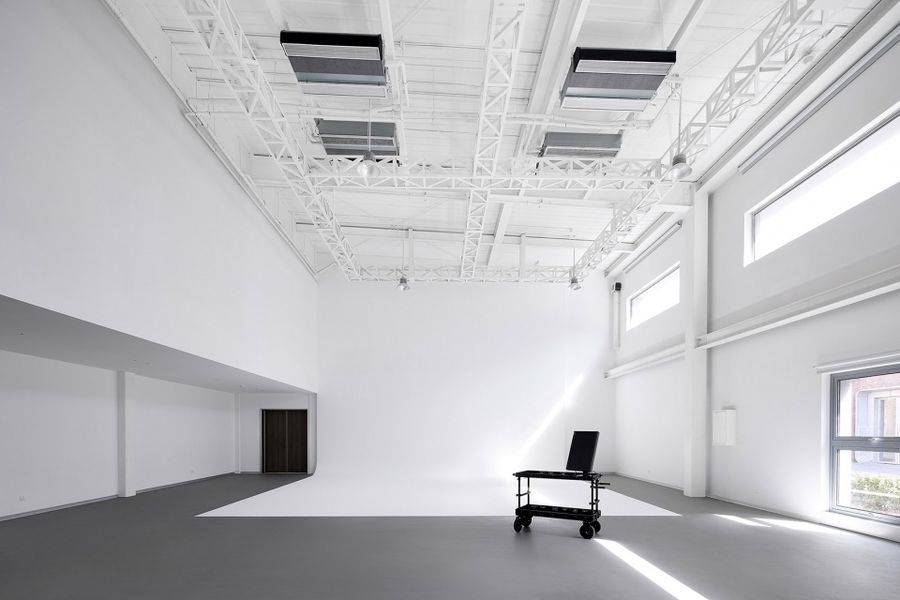
▼常規(guī)棚凈高在5-8米之間,regular studio with head clearance of 5-8 meters ? 安利
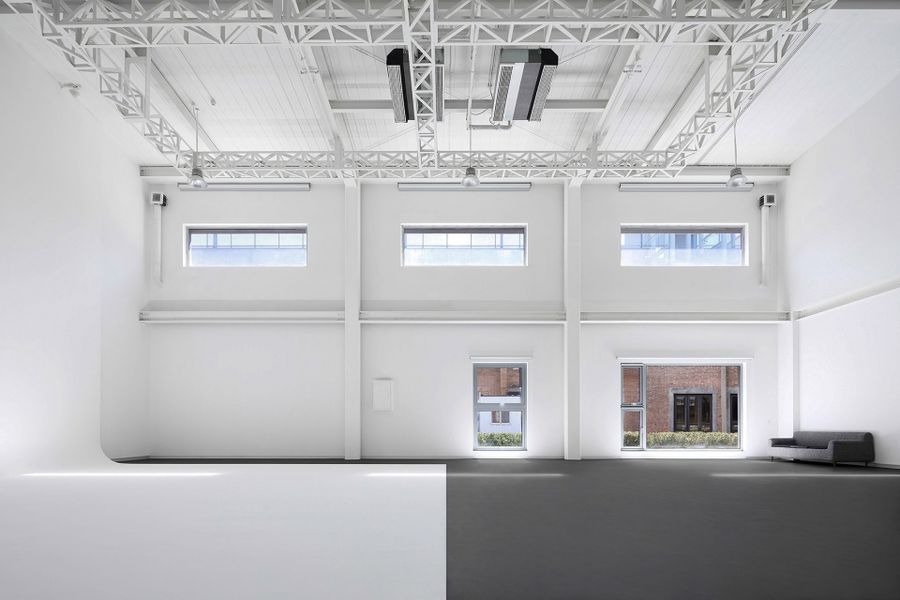
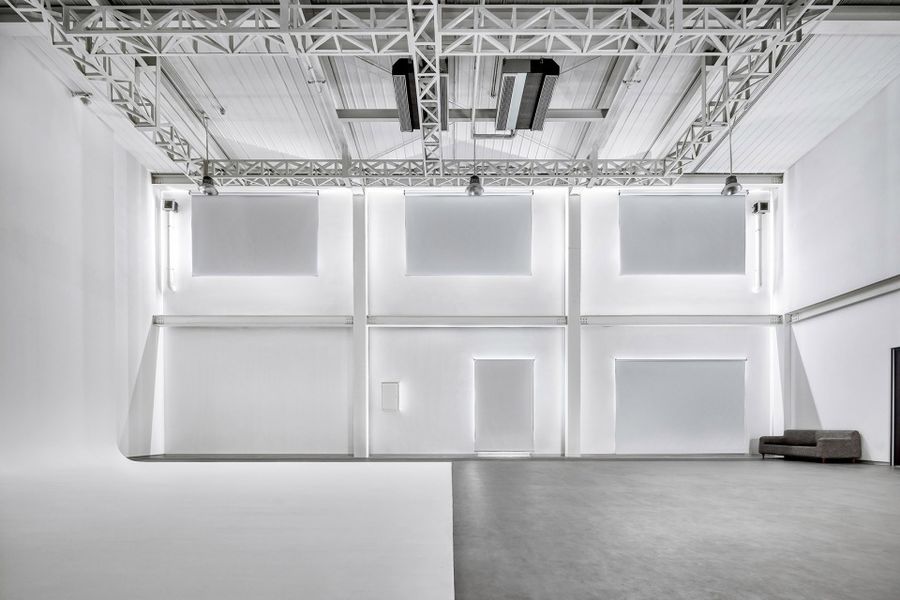
▼關(guān)閉遮陽卷簾后的攝影棚,studio with rolling shutters ? 安利
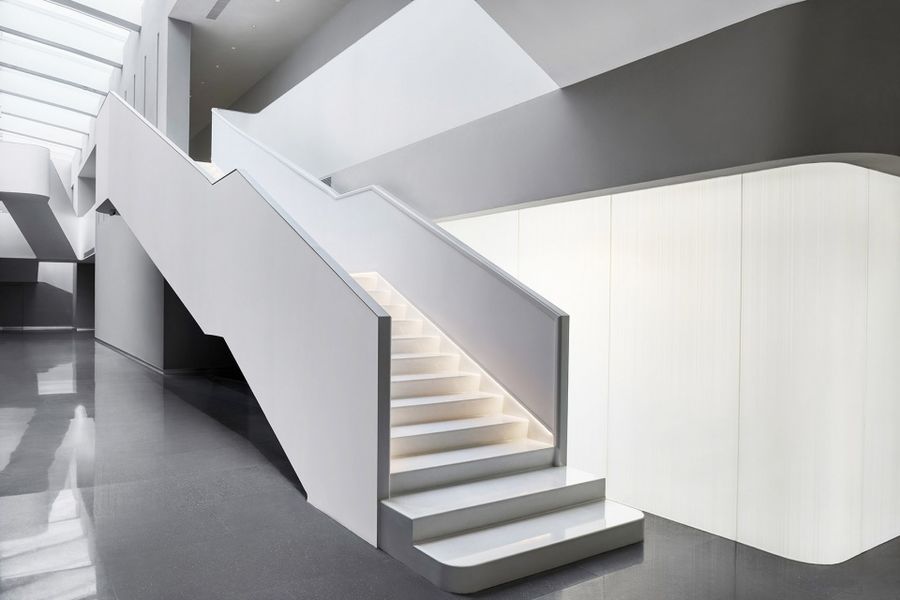
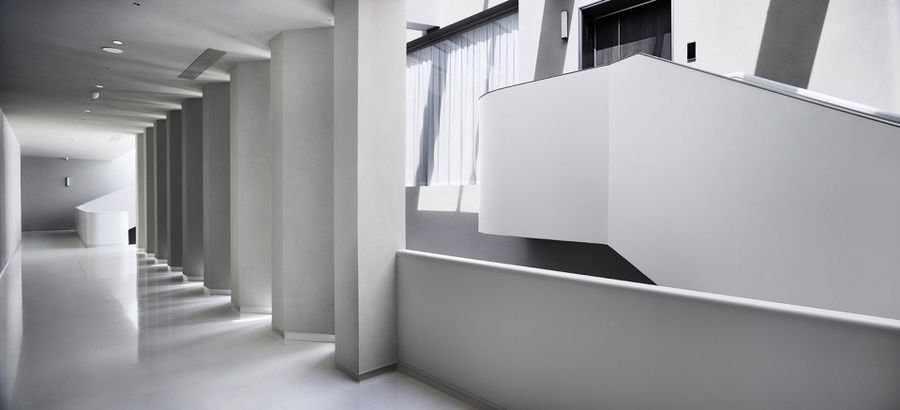
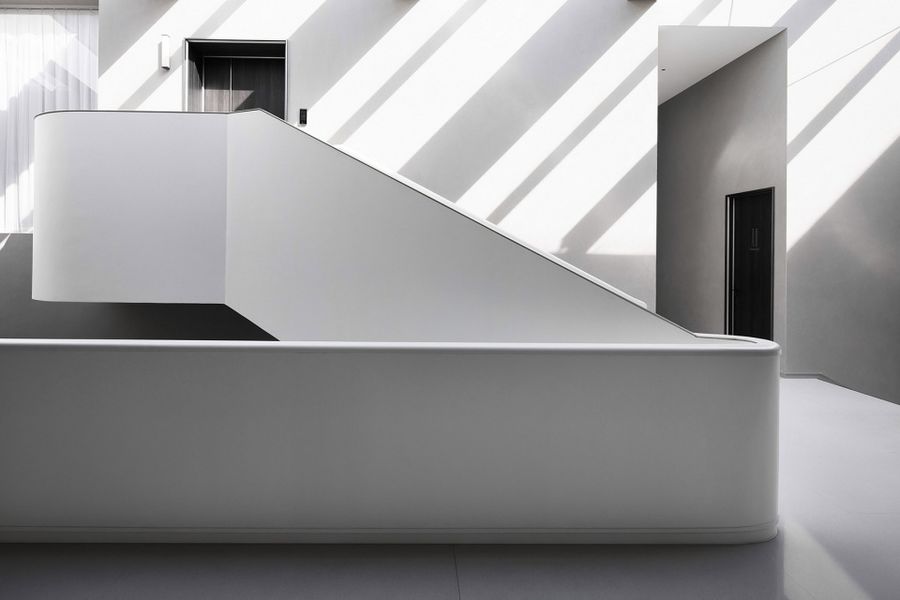
最具戲劇性反差的地方是中心走廊。走廊分為上下兩層,聯(lián)系南北兩側(cè)樓層的變化高差。一道35米長,帶有遮陽卷簾的天窗,將屋面切開,讓自然光傾瀉進(jìn)入建筑內(nèi)部各個(gè)角落。明亮四處蔓延,陰影翩翩起舞。四段乳白色的樓梯,將圍繞光影走廊的簡單循環(huán)動(dòng)線變成移步換景的旅程。訪客發(fā)現(xiàn)自己如置身于一座以光為景的展廳。
The climax of the lighting display happens in the central hallway. The linear multi-level circulation spine connects all rooms horizontally and vertically. Equipped with rolling shutters, a 35-meters long skylight splits the roof. It generously invites sunlight into every corner of the central space, creating an ever-changing dance between light and shadow. Four pieces of opalescent white stairs surround the central space. As one walks the loop circulation, one’s experience of light and dark is constantly shifting. Visitors find themself immersed in a gallery of luminosity.
▼中心走廊,the central hallway ? 安利
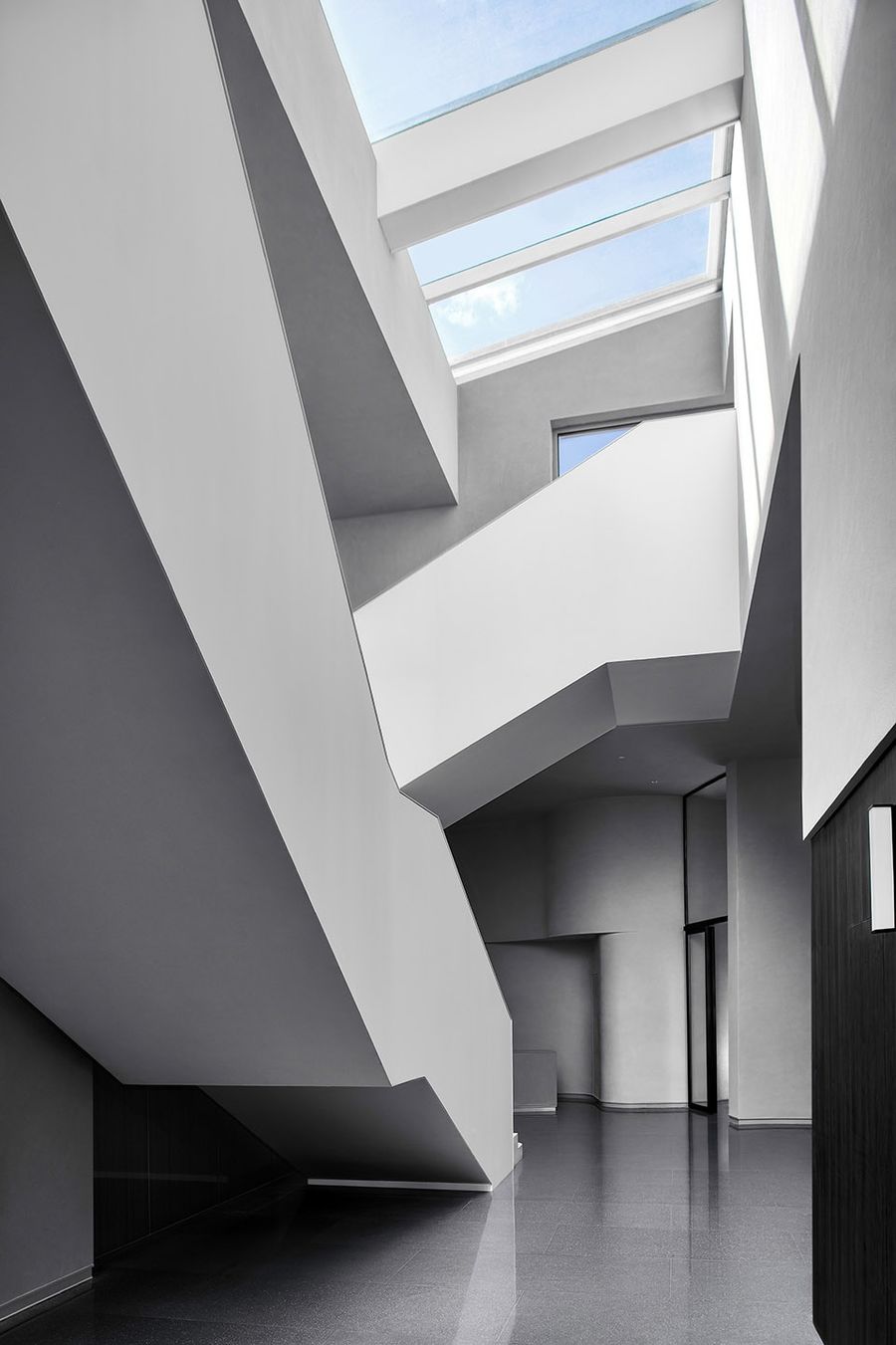
▼樓梯,staircase ? 安利
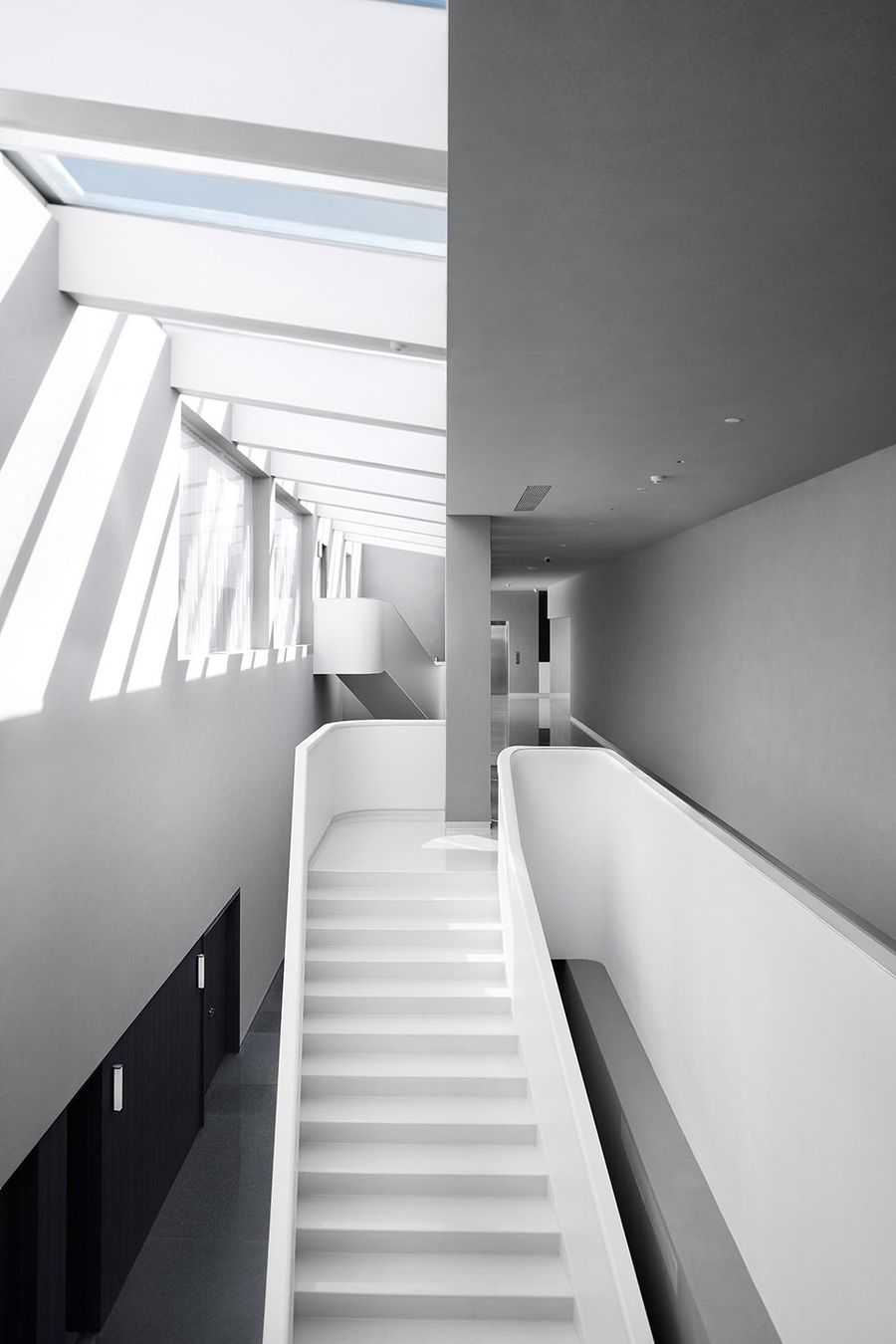
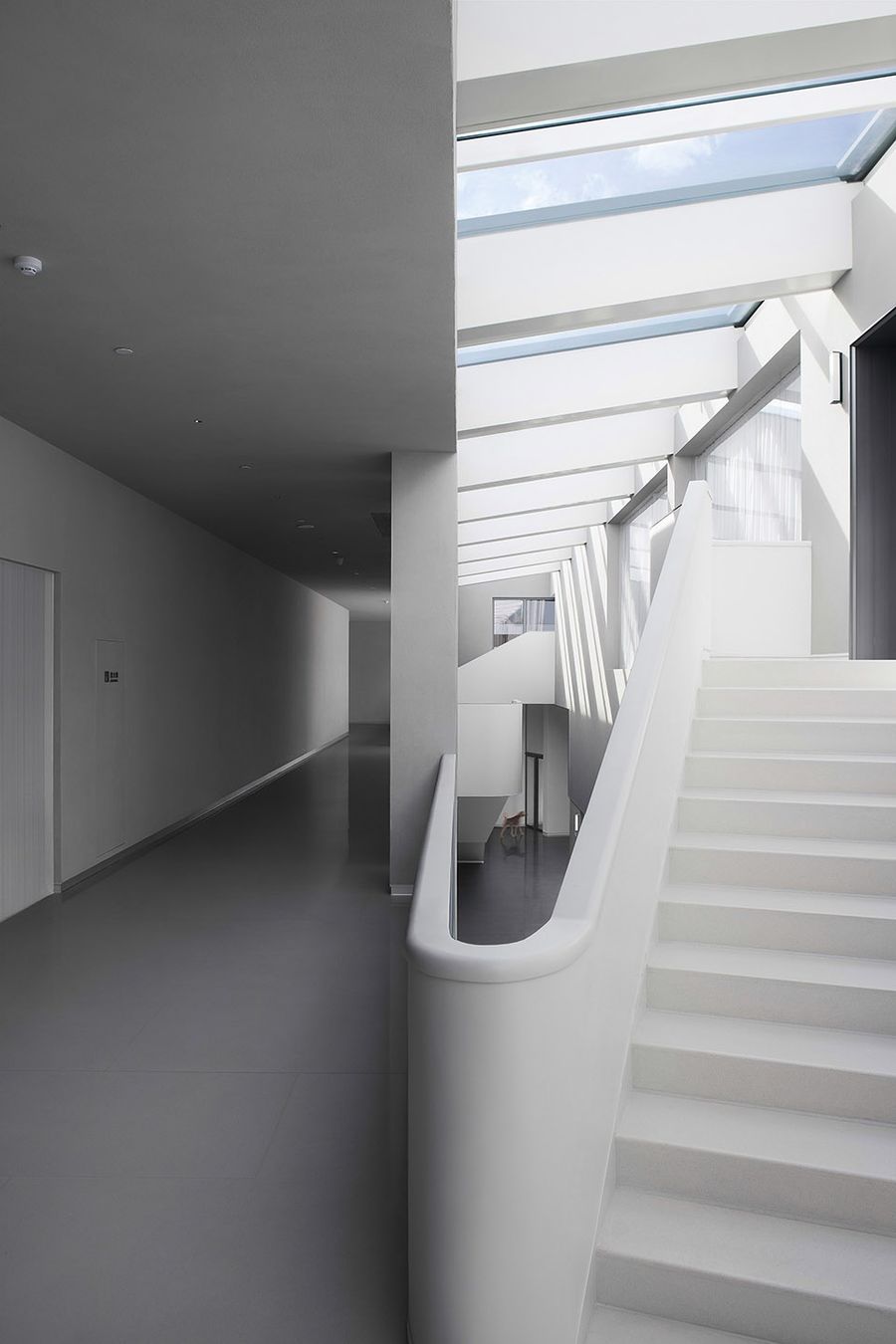
▼二層走廊,corridor on the upper floor ? 安利
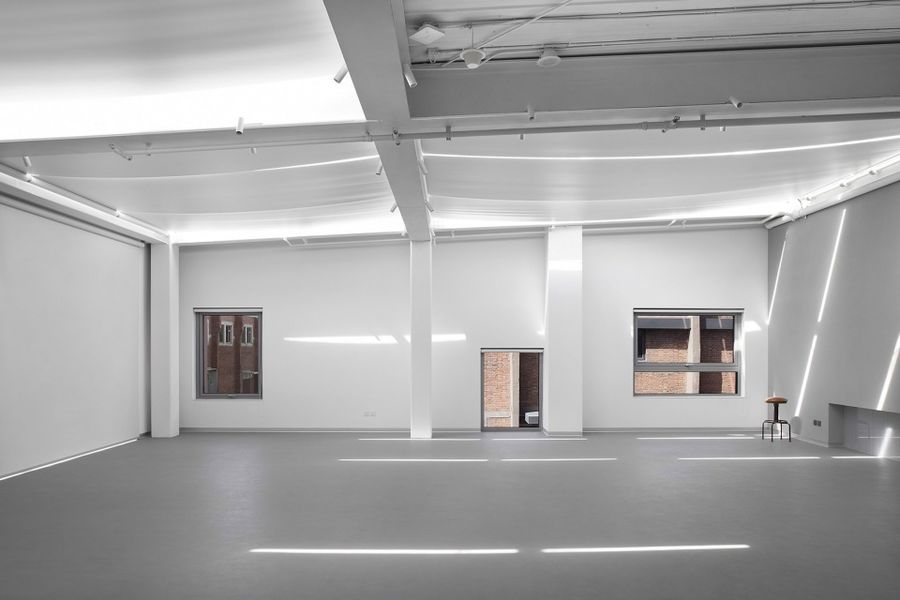
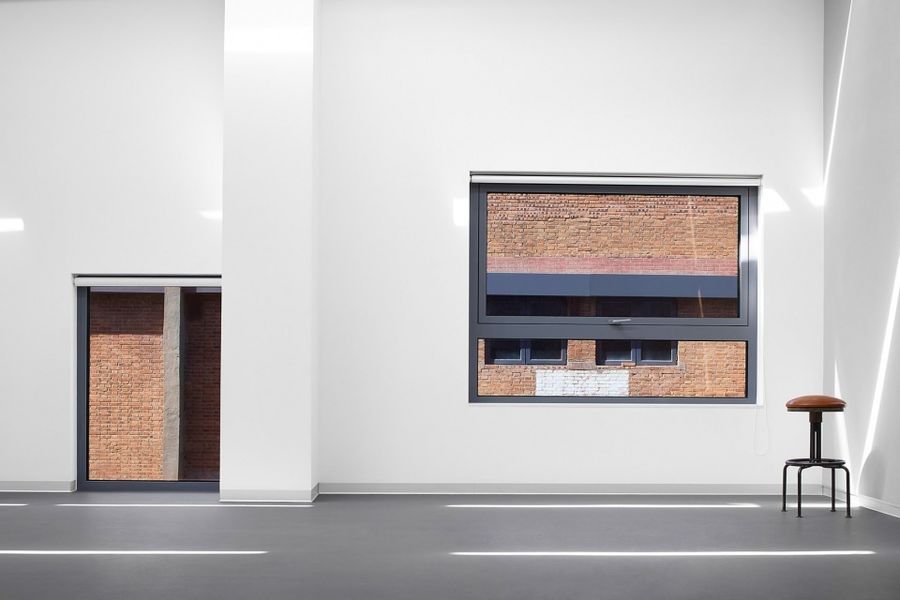
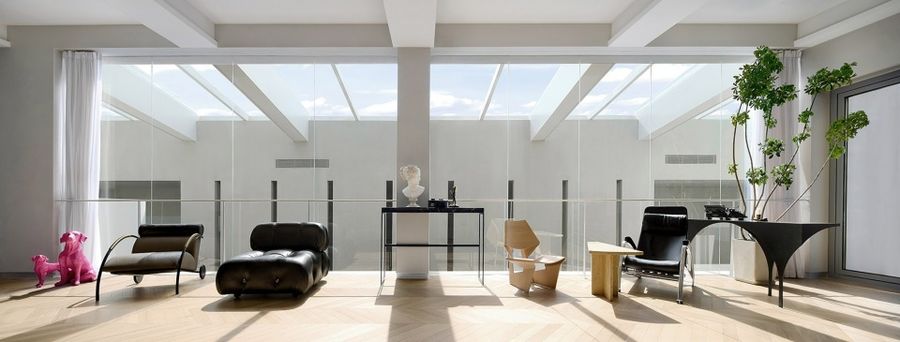
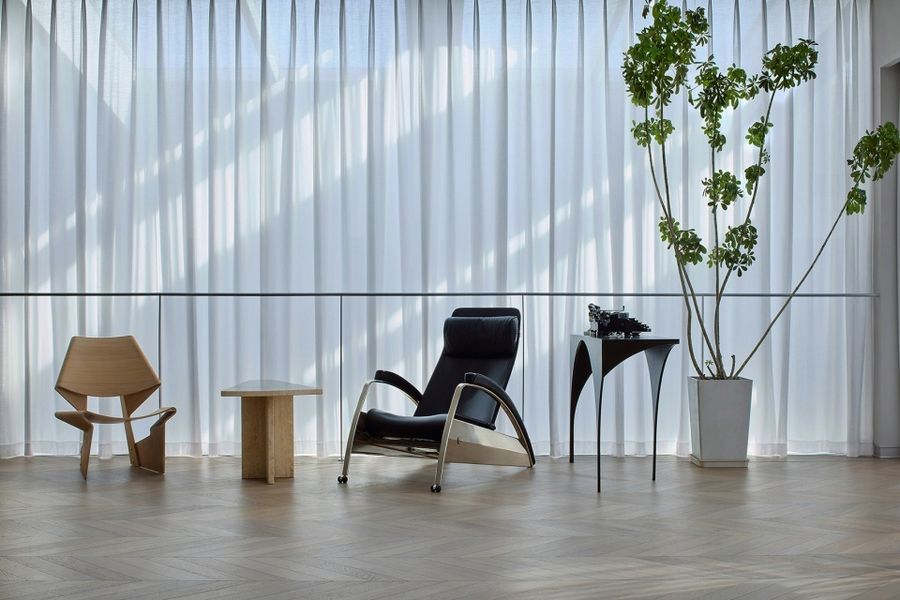
室內(nèi)加建的最高區(qū)域是供攝影師休憩的個(gè)人空間。余留地創(chuàng)造出一個(gè)帶有露臺,充滿愉悅氛圍的空中居所。壓低的傾斜天花使房間具有閣樓的尺度特征,卻因?yàn)榘咨拇罄硎瘔γ婧统渑娴牟晒舛讹@明亮,但又不因此而灼熱難耐。這主要?dú)w功于南向的整面落地玻璃,通過光影走廊的天窗獲取過濾后的太陽輻射。房間西側(cè)的玻璃幕墻則將室內(nèi)與室外平臺貫通。種植著常綠灌木和四季花草的露臺,成為主人和他的三只愛犬日常嬉戲的空中庭院。偶爾,這里也可以被當(dāng)作一個(gè)自然光拍攝的室外攝影棚來使用。
The photographer’s private lounge is located on the top floor complete with a rooftop garden. The “residence in the sky” is given an intimate feel by lowered ceiling height, while abundant natural light is made possible by the floor to ceiling glass wall facing the central hallway. This pleasant retreat is further extended to the rooftop garden decorated with ever-green hedge and perennial flower bed. It can be used as additional open-air studio, as well as an elevated playground for the owner and his three dogs.
▼白色的大理石墻面和充沛的采光,white marble walls and plenty of light ? 安利
雖然改造后的建筑內(nèi)部為私人領(lǐng)域,但圍繞外墻的街道邊界并沒有采用封閉式的景觀處理。這反映了余留地團(tuán)隊(duì)努力在所有項(xiàng)目中貫徹的“共享私域”理念。重新修整的人行道路,為襯托原建筑磚墻而設(shè)置的灌木叢,以及在相鄰廠房間的空隙里增添的喬木綠蔭,都為正在經(jīng)歷重生的工業(yè)園區(qū)創(chuàng)造出城市街區(qū)應(yīng)有的宜人環(huán)境。
Although the studio is renowned for portrait photography for Chinese celebrities with high demands for privacy, the perimeter of the building is not fenced off from surrounding streets. This reflects the pursuit of designRESERVE to create “shareable domain” within all projects commissioned by private clients. As a result of the team’s extended effort on landscape design, the broken pavement of the sidewalk is replaced, aging brick wall is brightened by evergreen hedges, and newly planted trees provide much needed shade for pedestrians in the narrow alleyway between the warehouses. With progressive but sensitive approach, the project exlpores a model on how to develop negative industrial inventory into positive urban context.
▼南向的整面落地玻璃,the floor to ceiling glass wall facing the central hallway ? 安利
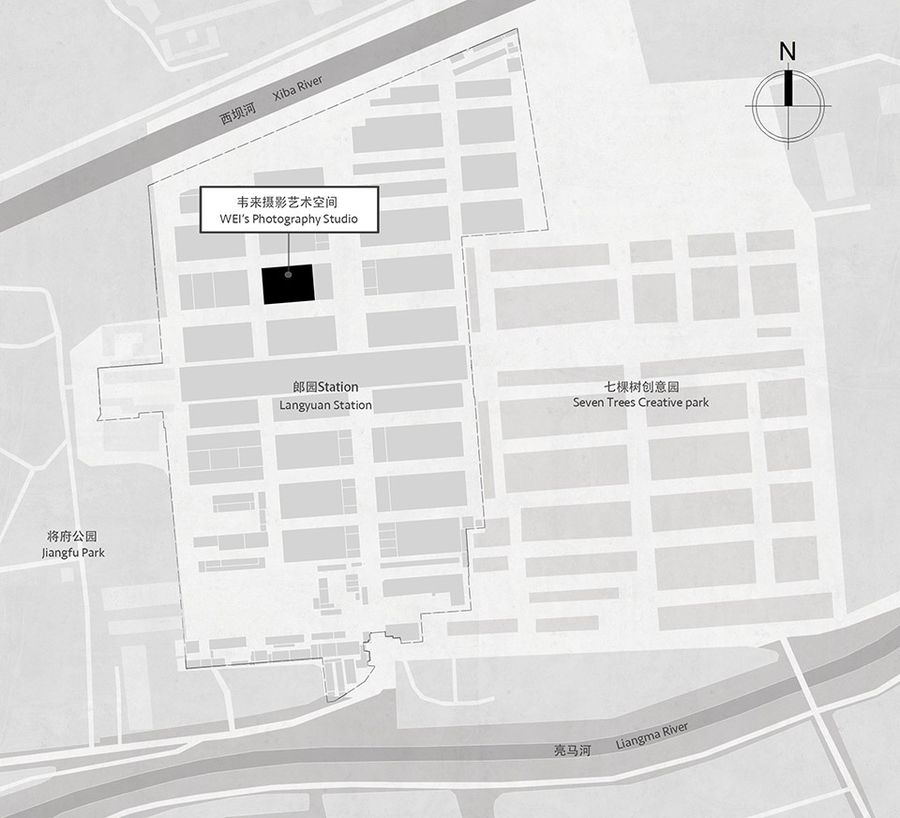
▼區(qū)位圖,location plan ? 余留地
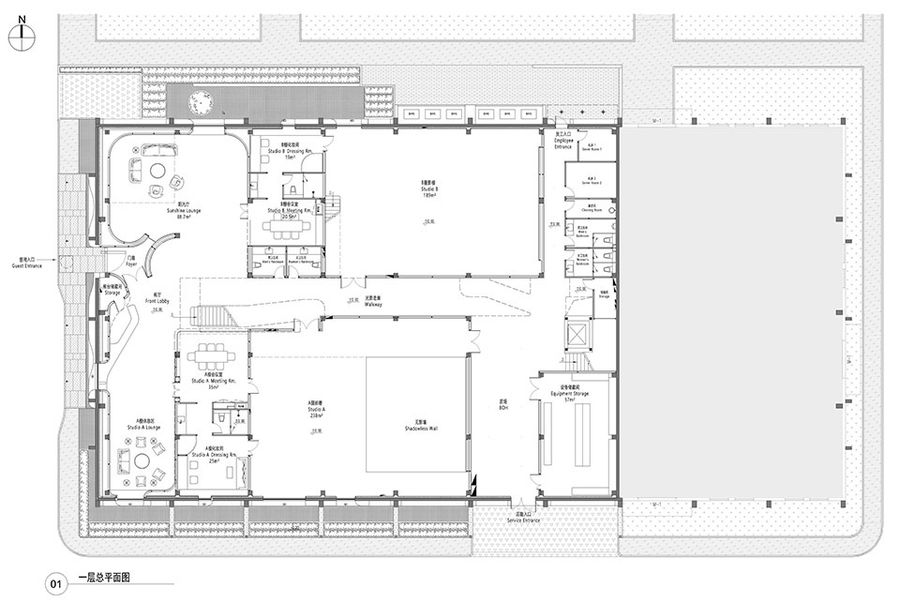
▼一層總平面圖,ground floor plan ? 余留地
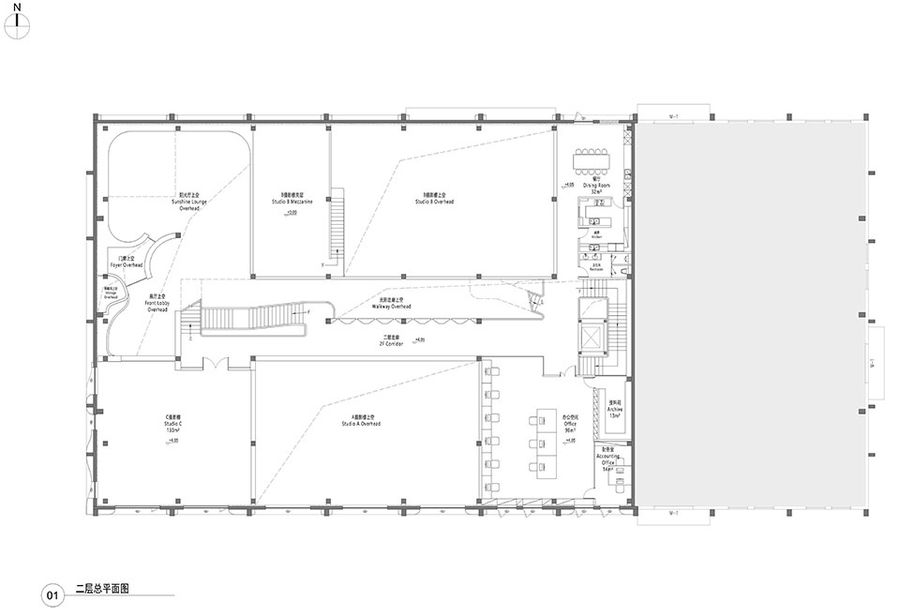
▼二層總平面圖,second floor plan ? 余留地
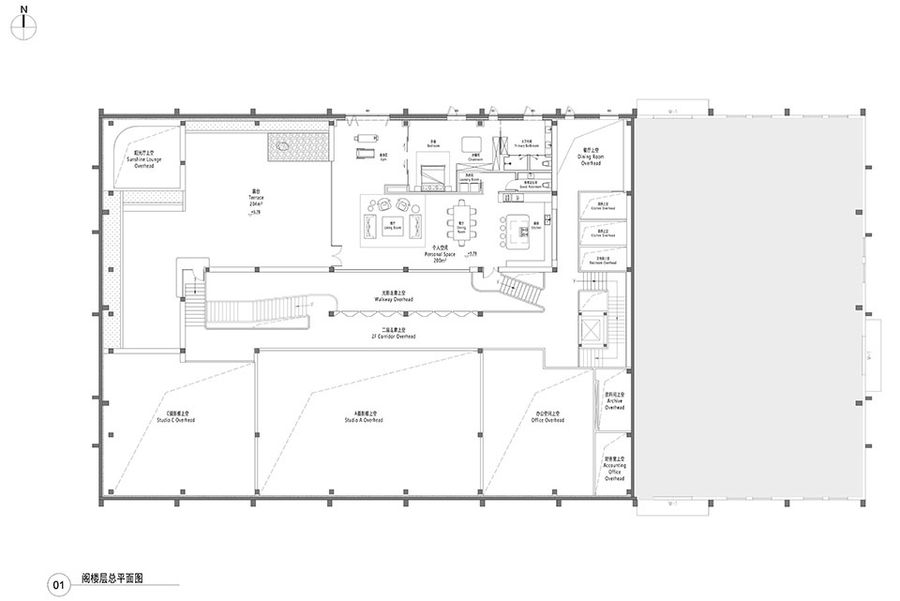
▼閣樓層總平面圖,mezzanine floor plan ? 余留地
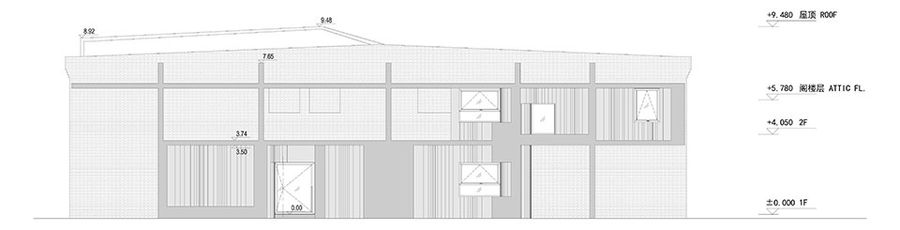
▼立面圖,elevations ? 余留地

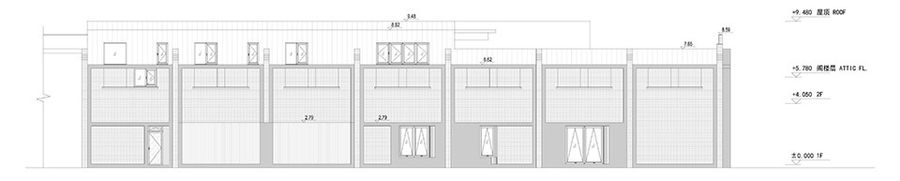
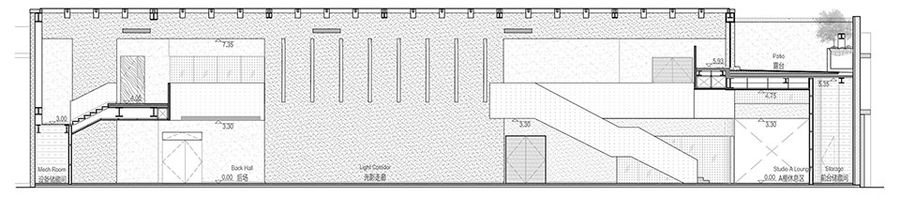
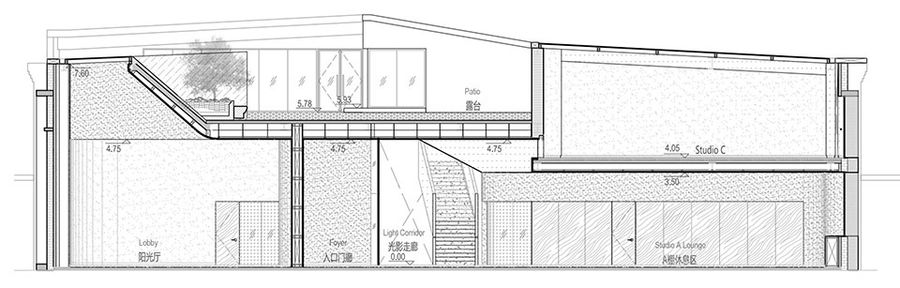
▼剖面圖,sections ? 余留地
項(xiàng)目名稱:韋來攝影藝術(shù)空間
項(xiàng)目類型:辦公空間
設(shè)計(jì)方:余留地
公司網(wǎng)站:http://www.designreserve.co/
聯(lián)系郵箱: [url=mailto 
項(xiàng)目設(shè)計(jì):2019-2020
完成年份:2022
設(shè)計(jì)團(tuán)隊(duì):宋方舟,岳峰,賴智薇,蒲潔宇,傅詩,魏丹,宋蕾,林畫兒
項(xiàng)目地址:北京朝陽區(qū)半截塔路53號首創(chuàng)郎園Station
建筑面積:2185 ㎡
攝影版權(quán):安利,韋來
客戶:未來境界攝影工作室
材料:GRC,磚,水磨石,人造石,直立鎖邊金屬板,木飾面板, 微水泥
Project name: WEI’s Studio of Photography Art
Project type: Workspace
Design: designRESERVE
Website: http://www.designreserve.co/
Contact e-mail: [url=mailto
Design year: 2019-2020
Completion Year: 2022
Leader designer & Team: Lydia Song, Feng Yue, Momo Lai, Jill Pu, Sunny Fu, Dan Wei, Sherry Song, Hoere Lin
Project location: Langyuan Station, No.53 Banjieta Road, Chaoyang District, Beijing, China
Gross built area: 2185 ㎡
Photo credit: Li An, Lai Wei
Clients: WEI’s Studio of Photography Art
Materials: GRC, brick, terrazzo, engineered stone, steel panel, wood panel, textured stucco
 ?
?









評論(0)